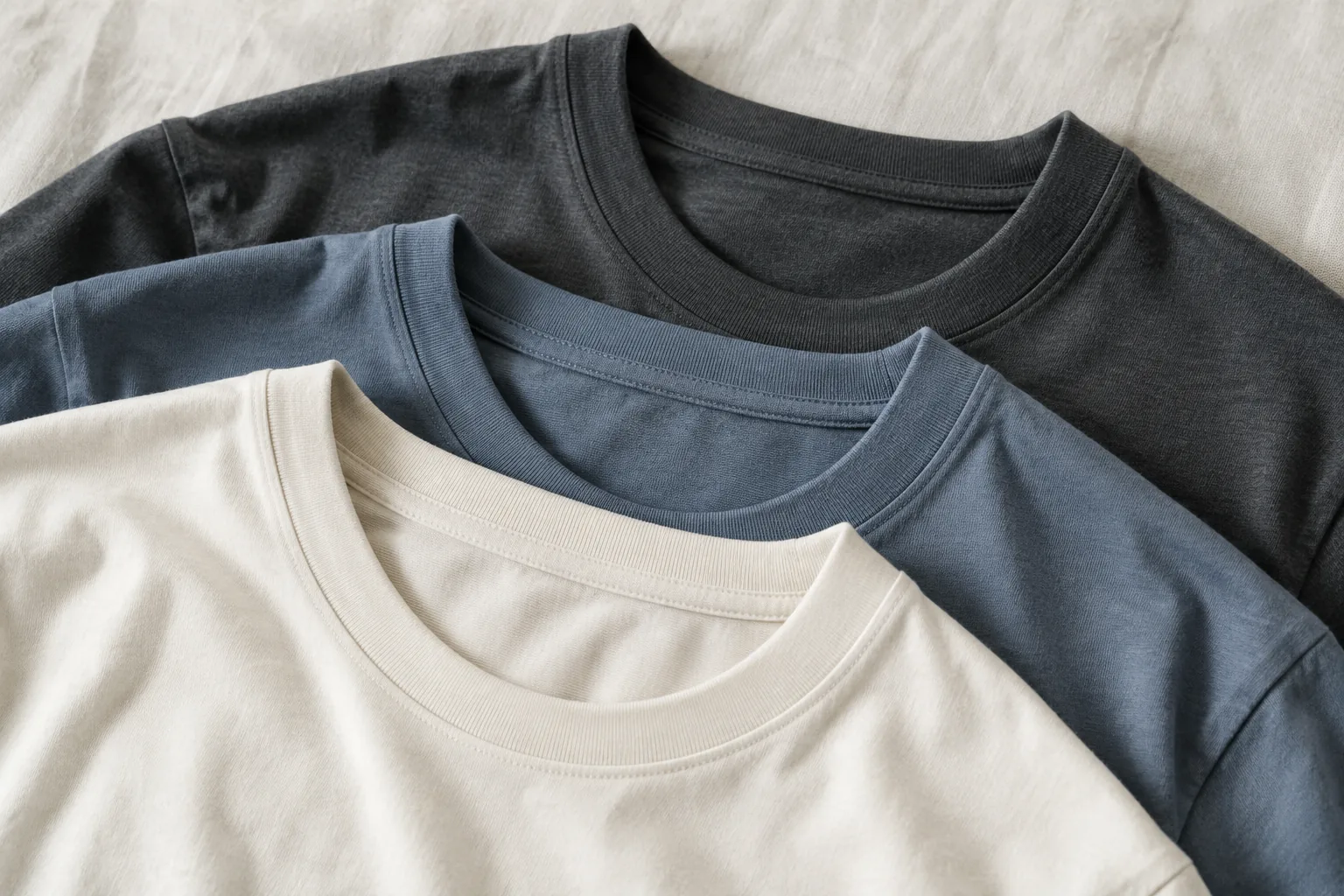
A useful T-shirt brief goes beyond “a good-quality tee”. Think about who will wear it, the shape you want, how it should feel and what the graphic needs. Fabric weight helps you compare options, but it is only one part of the decision. Here is how to narrow the range without buying on a single number.
Decide what the T-shirt is for
An event giveaway, a daily staff uniform and a retail collection have different priorities. For an event you may be balancing a fixed budget, broad size availability and a deadline. For a uniform, repeat availability, comfort and care can matter more. For a clothing label, the silhouette, fabric feel and consistency across the collection may lead the brief.
Write your top three priorities in order. “Relaxed shape, substantial feel, clear front graphic” is more useful than “premium”. If the required size range or delivery date is non-negotiable, establish that before spending time choosing between similar fabrics.
Understand what GSM can tell you
GSM is grams per square metre: the weight of an area of fabric. It does not measure the whole garment and it is not a complete quality rating. A larger T-shirt uses more fabric than a smaller one even when both use the same GSM material.
Within comparable constructions, a heavier fabric can give a more substantial impression, while a lighter fabric can feel less bulky. The knit, fibre, finishing and cut still affect drape, opacity and comfort. Do not assume the highest GSM is the best option for warm working conditions, or that a light garment is automatically poor quality.
| Specification | What it helps you understand | What it cannot settle alone |
|---|---|---|
| Fabric weight / GSM | Weight of a given area of fabric | Overall quality, fit or longevity |
| Fibre composition | Which fibres the fabric contains | The complete feel or performance of the finished garment |
| Fit and measurements | The cut and dimensions of the selected style | Whether a different brand’s same letter size will match |
Check the exact colourway and fit
Read the composition for the colour you are buying. A heather or marl option may differ from the solid colours in the same range. Ask about the actual product specification if it is unclear; a style name is not enough to establish the fabric blend.
Compare chest width, body length and sleeve shape using the selected garment’s chart. A boxier or relaxed cut can change the way a front graphic sits, even when the nominal size is unchanged. If you are comparing a favourite T-shirt, lay it flat without stretching it and use the same measuring points as the supplier chart.
Give the graphic room to work
Check the design on the smallest garment in the proposed order as well as on the larger ones. A placement that suits an adult large may not fit the same way on a smaller or differently cut style. Decide whether you want one consistent artwork size or a deliberate set of sizes; confirm the available production options and costs.
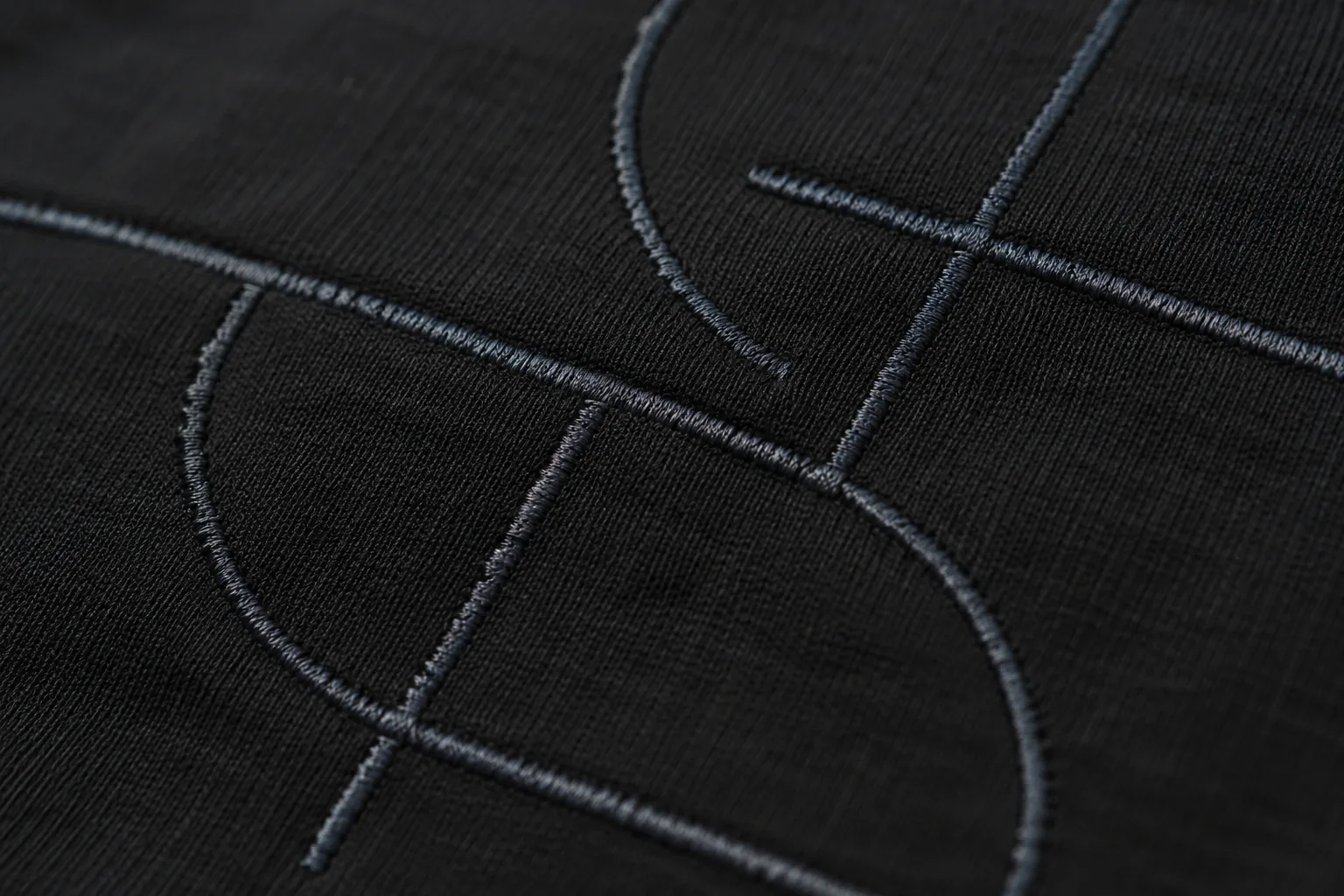
For pixel artwork, ask whether the file has enough information at the required print dimensions. A sharp-looking thumbnail is not proof. For embroidery, discuss whether the fabric and design suit the intended stitch area. Colour Apparel presents Print and Embroidery as the buying choices; the team determines the appropriate production process within Print.
Use a sample to answer the right questions
A plain sample helps you assess fit, fabric, colour and construction. A decorated sample also lets you assess the branding. Neither replaces checking the complete size list and order specification. If you plan to compare several styles, use the same questions for each so the decision does not depend on whichever sample you opened last.
- Does the fit match the intended customer or team?
- Is the fabric comfortable for its planned use?
- Does the selected colour and composition suit the design?
- Is the size range sufficient?
- Have you checked the care instructions and repeat-order requirements?
Your next step
Write a short brief covering purpose, fit, fabric feel, colour, size range, artwork and deadline. That gives the team a clear basis for recommending the right T-shirt.
Find your sizeSources and further reading
Product guidance is specific to the supplier or process. Colour Apparel service details are confirmed in the linked Help guides.
Need a little more help?
Continue with the Guide or go straight to the team.